The truth of Polymarket’s content has been questioned.
The recent public criticism by the founder of the Amazon, Jeff Bessos, of a false content published by Polymarket on social media on the prognosis platform has once again sparked public controversy over the prognosis platform. In a social platform, Polymarket wrote that Bessos had recommended that “the Z generation of young people who want to start a business should start their own business first by doing real jobs like McDonald’s or Palantir”.
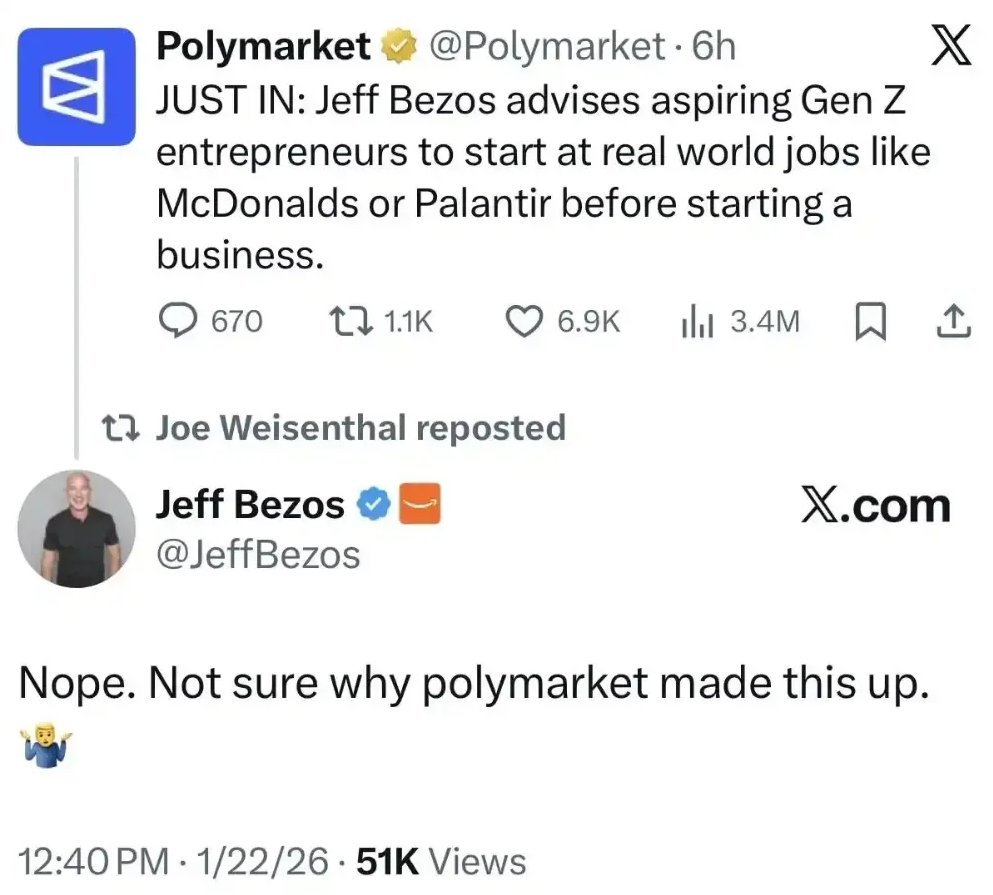
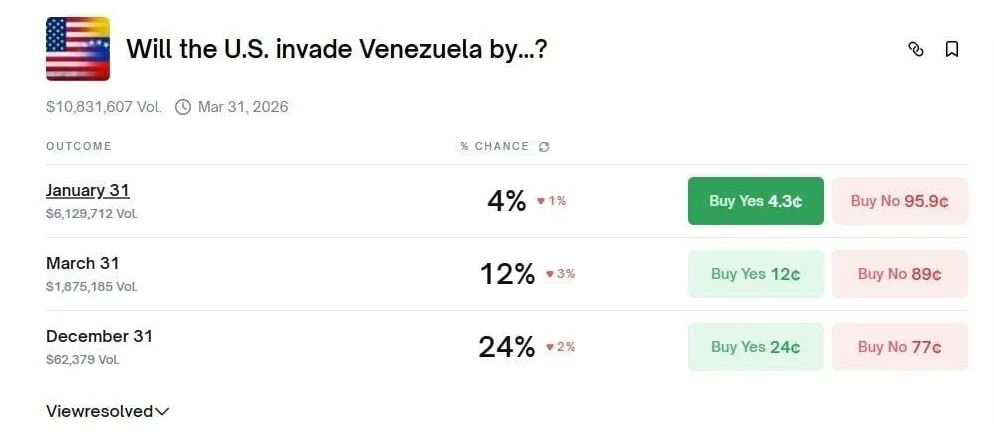
Bessos publicly responded that “it is not clear why Polymarket made these words”. It is not clear what the impact of Polymarket ‘ s statement is, but it reveals a more topical concern: why should the platform make such a statement? Predicting a market is not a random social platform, but a financial environment in which real money is pledged to real results, making accuracy much more than a matter of detail. Polymarket, although not a news agency, is presented in a news style: in title, citation format, and distributed in user access to up-to-date information streams. If a platform is willing to publish unverified statements in order to increase the rate of interaction, users have reason to question the rigour of its content review. Polymarket had previously been the subject of controversy over the opening of a forecast market on whether the United States would “invasion” Venezuela. Despite the subsequent military action of the United States forces against President Maduro of Venezuela, Polymarket ruled that its definition of “invasion” in the terms of the contract was not satisfied and refused to settle with those who would have expected to have made a profit. While following the rulebook, this decision was in serious conflict with public awareness of the events. For many users, frustration does not stem from technical details, but from trust.
Markets are no longer a back-to-back tool, and they are now in the same information stream as news, sports and political content and often lack sufficient background. News-like posts naturally attract attention, which may facilitate people ‘ s participation in particular markets, increase transactions and, in turn, benefit the Platform through higher transaction volumes and fees. The Platform is responsible for this. Although this false report on Bessos seems harmless (not to mention the absence of any active market), it does give the impression that the platform is sliding to the irresponsible edge. The incident was not a scandal in itself, but it revealed a high degree of uncertainty in predicting markets when attention to the economy overlapped with commentary functions. It is anticipated that the market has inadvertently become a marketing tool, involving brands, individuals and events in public discussions without deliberate planning. For a platform that requires users to place a bet on real results and that is under continuous regulatory review, one should expect strict rules for its operation, but reality is a source of reflection.

Related Posts
Supercell will fully acquire Merce Mansion’s developer Metacore, with 160 staff reductions.

Q1 in-house purchases in 2026 amounted to $20.5 billion, a 12 per cent decrease in downloads over the same period